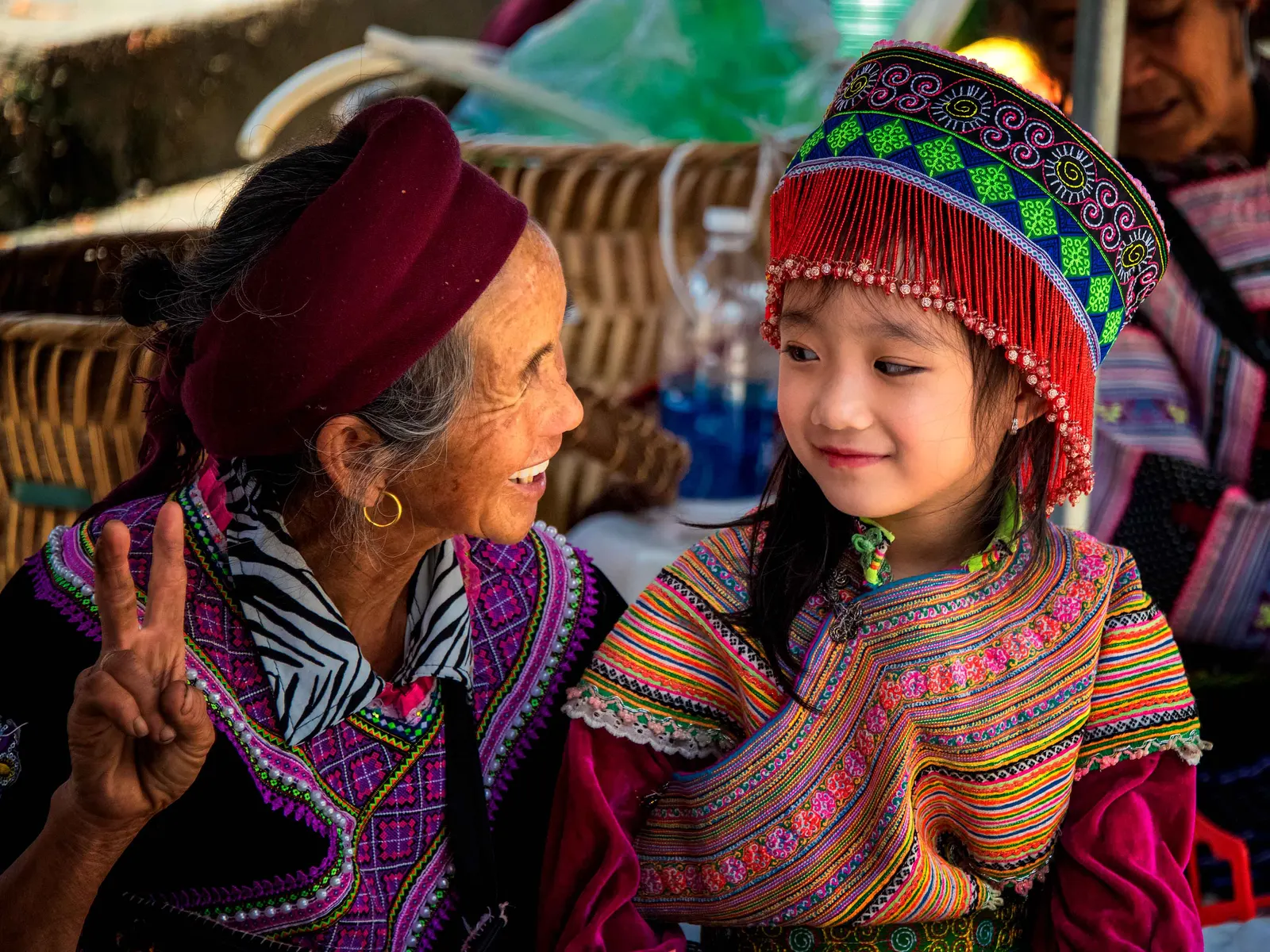
Documentary photograph by Rod Waddington, shared under CC BY-SA 2.0.
Dali City
Southwest · Yunnan
Bai Headwear, Snowcap and Camellia Red
A headdress that lists the four sights of Dali — wind, flowers, snow, moon — on one head
Bai women’s headdress encodes Dali’s four famous sights: the drooping tassel is the Xiaguan wind, the white trim is Cangshan snow, the embroidered petals are Shangguan flowers, and its curved shape holds the Erhai moon.
- snow-white fur trim
- camellia red
- moon-shaped tassel
Spring
Third Month Fair
The lunar Third Month Fair fills Dali with full festival dress, horse racing and trade.
Place layer
Dali Old Town and Xizhou, Yunnan
Dali City
- Coordinates
- 25.6930° N, 100.1620° E
- Seasonal clothing cue
- Highland sun is fierce: the white vest and the headdress veil are sun gear as much as decoration.
- Reality check
- Map, 3D and Street View availability depends on regional coverage and capture date; this is a reference view, not a live feed.
Map, 3D and Street View availability depends on regional coverage and capture date. This layer is a fast reference, not a live feed.