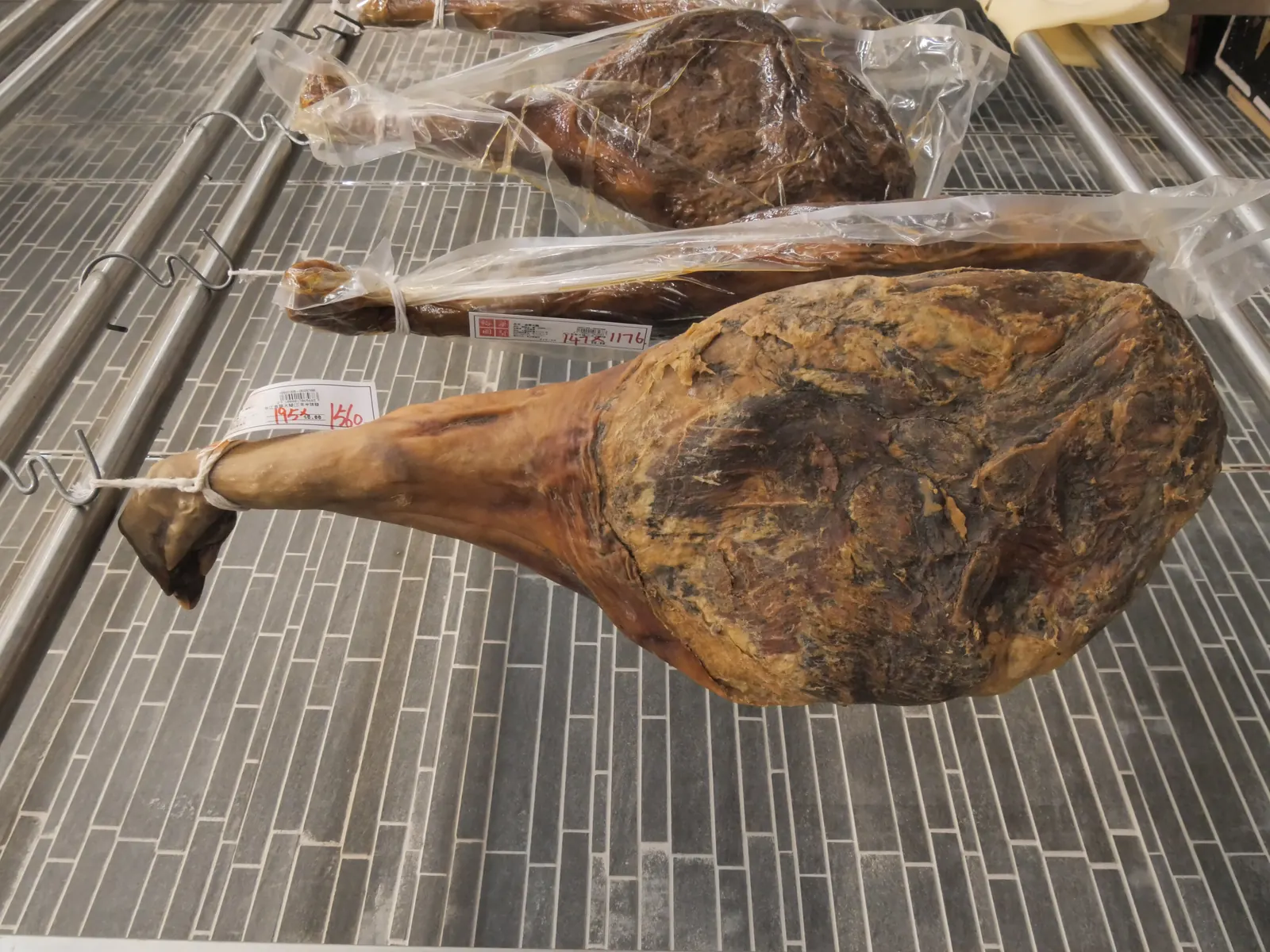
A whole Jinhua ham hanging on a shop rack, its cured surface dark and amber.Documentary photograph by Peachyeung316, shared under CC BY-SA 4.0.Source / rightsWikimedia Commons · explicit-license

Jinhua City

East China · Zhejiang

Jinhua Ham, the Leg That Waits

Salting, washing, sunning, and a full year of fermentation on the leg

A whole pig leg cured through winter, sunned in spring, and left to ferment until the fat turns amber and the flesh smells faintly of flowers — then used by the spoonful, never by the slab.

  • amber fat
  • ferment
  • aroma
Spring

Sunning rows on the racks

Spring sun moves the racks outdoors; entire courtyards fill with rows of amber-legged silhouettes.

Open the full entryRead the travel note

08 · travel note

Jinhua Ham, the Leg That Waits

City anchorJinhua City

Best time
Winter for finished cuts and tastings; spring to see the sunning racks.
Stay
Half day

A way throughPair a craft-house visit with the old town, and buy vacuum-sealed retail cuts rather than unrefrigerated market ham.

On the wayHigh-speed rail reaches Jinhua from Hangzhou in about an hour; craft houses cluster in the old county areas.

With respectThis is a seasoning tradition: a thumb-sized piece perfumes a whole soup pot, and eating it slab-style misses the entire point.

A whole Jinhua ham hanging on a shop rack, its cured surface dark and amber.Real scene

Seasonal experience

A winter morning in the craft quarter

Taste it against the light, then in soup

Ask for a paper-thin slice held to the window — the fat should glow amber — then taste the same ham floating in a clear winter melon soup to understand why it is a seasoning, not a centerpiece.

Why now
Amber fat and a floral aroma are the acceptance standard; salt-forward sharpness means the leg is young.
Time needed
1 to 2 hours for the craft visit plus tasting
Plan before you go
Working houses keep craft-season hours; arrange visits ahead, as active curing rooms restrict casual entry.
Photo: Peachyeung316 / Wikimedia Commons