Documentary photograph by FN-082, shared under CC BY-SA 4.0.
Libo County
Southwest · Guizhou
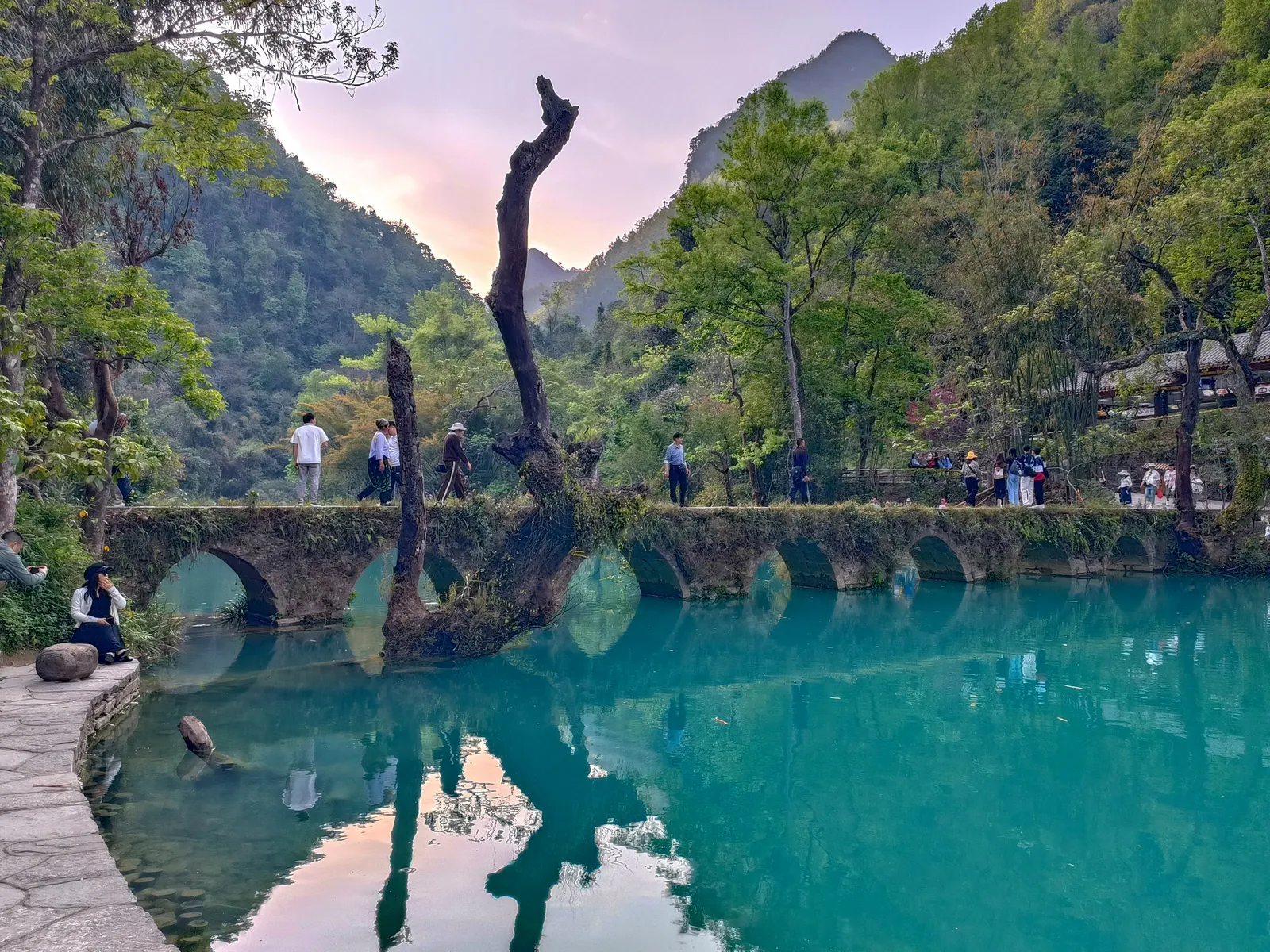
Xiaoqikong, the Seven-Arch Bridge Water
A Daoguang-era seven-arch stone bridge on the old Guizhou-Guangxi trade road
A slim stone bridge of seven arches crosses water the colour of polished jade: upstream, the Xiangshui River descends sixty-eight terraced cascades through subtropical forest.
- seven arches
- emerald water
- cascade terraces
Spring
High water, full cascades
Spring rains swell the river: the sixty-eight cascades run at their fullest and loudest.
Place layer
Xiaoqikong Scenic Area, Libo
Libo County
- Coordinates
- 25.4163° N, 107.7729° E
- Seasonal clothing cue
- Boardwalks are wet year-round from spray: shoes with grip, and start early — tour waves arrive by ten.
- Reality check
- Map, 3D and Street View availability depends on regional coverage and capture date; this is a reference view, not a live feed.
Map, 3D and Street View availability depends on regional coverage and capture date. This layer is a fast reference, not a live feed.